The Major Acting Techniques Explained: Stanislavski to Meisner
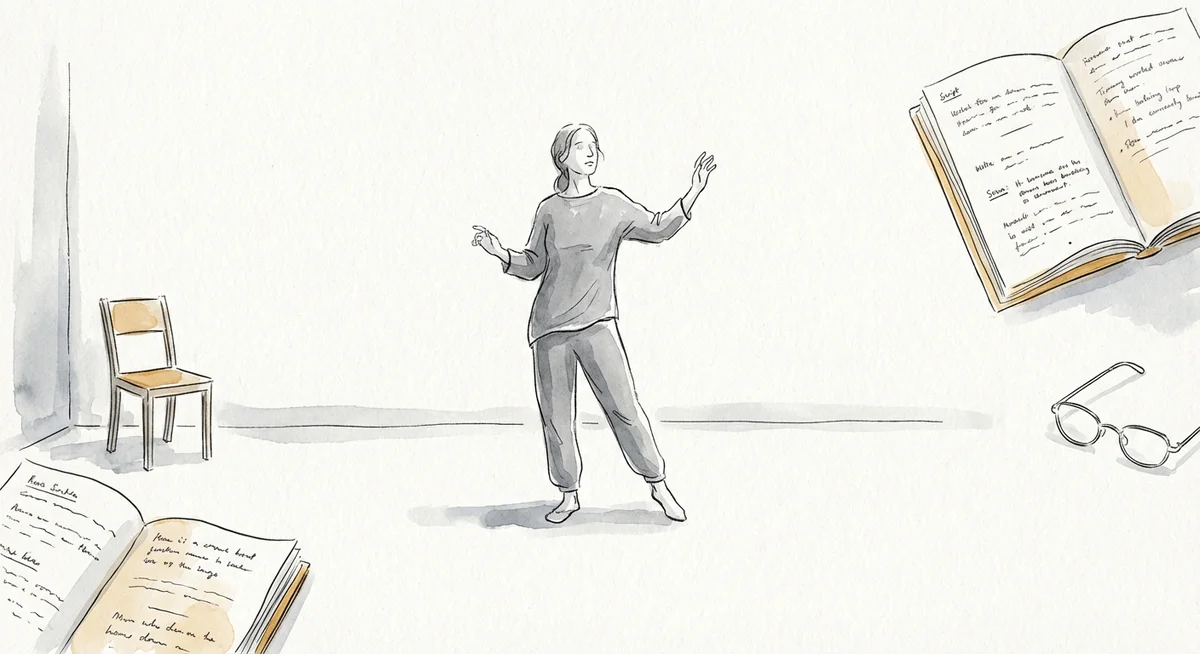
Walk into any drama school audition or professional rehearsal room in the UK, and you'll hear names like Stanislavski, Meisner, and Chekhov mentioned with reverence. These teachers developed approaches to acting that continue to shape how performers train and work today. But what do these techniques actually involve? How do you know which one might suit you?
Understanding the major acting techniques isn't about picking a single "correct" method. Most working actors draw from several approaches depending on the role, the production, and their own instincts. This guide covers the five most influential techniques: their origins, core principles, and practical applications.
Stanislavski's System: Where It All Began
Konstantin Stanislavski, a Russian actor and director at the Moscow Art Theatre in the early 1900s, changed how actors approach their craft. Before him, much Western acting relied on external presentation: learning fixed gestures and vocal patterns to indicate emotions. Stanislavski asked a different question. What if actors could actually experience something genuine on stage?
Core Principles
At the heart of Stanislavski's System is the pursuit of emotional truth. Rather than showing an audience what anger or grief looks like, Stanislavski wanted actors to feel something real and let that inner life inform their performance.
Several concepts support this goal:
The "Magic If" involves asking yourself, "What would I do if I were in this character's situation?" It's a simple but powerful imaginative leap connecting your own humanity to the character's circumstances.
Given Circumstances are all the facts of the play: time period, location, relationships, what's happened before the scene begins. Understanding these helps you respond truthfully within the world of the story.
Objectives address what your character wants in each scene. Stanislavski believed pursuing a clear objective gives your performance direction and energy. He often broke this down into smaller "beats," distinct units where your character pursues a specific goal.
Key Exercises
Stanislavski's later work emphasised the "Method of Physical Action," the idea that doing something physical can unlock genuine emotion. Rather than trying to feel sad and then crying, you might focus on a physical task (packing a loved one's belongings, for instance) and allow the emotion to arise naturally.
Another cornerstone is active analysis through improvisation. Instead of sitting around a table discussing a scene, actors improvise it in their own words to discover what's really happening between characters.
Why It Matters Today
Stanislavski's work forms the foundation for virtually every technique that followed. When your coach asks "What do you want in this scene?" or encourages you to consider your character's backstory, they're drawing on principles he developed over a century ago. Understanding his System gives you a shared language with directors and fellow actors across the industry.
Method Acting: Strasberg's Influential Adaptation
When Stanislavski's ideas crossed the Atlantic, they evolved. Lee Strasberg, working first with the Group Theatre in the 1930s and later at the Actors Studio in New York, developed what became known as Method Acting. This approach became enormously influential in American film.
Core Principles
Strasberg focused on Stanislavski's earlier explorations of emotional memory, the idea that actors could draw on their own past experiences to fuel their performances.
Emotional Recall (Affective Memory) involves deliberately accessing memories from your own life that provoke emotions similar to those your character experiences. If your character is grieving, you might recall a personal loss to connect with that feeling.
Sense Memory trains you to recreate physical sensations through imagination alone: the warmth of sunlight, the texture of sand, the taste of a particular food. The goal is to make imaginary circumstances feel physically real.
Exercises and Training
Method training typically includes extensive relaxation work, since tension blocks emotional access. Actors learn to systematically release physical tension before attempting emotional exercises.
The "Private Moment" exercise asks actors to recreate something they would only do when completely alone, helping them achieve genuine vulnerability in front of an audience. Sense memory drills might involve spending long periods recalling specific sensory details until you can summon that sensation at will.
Famous Practitioners
The Method's influence on cinema is undeniable. Al Pacino, Dustin Hoffman, and Marilyn Monroe all trained with Strasberg. Robert De Niro drove a taxi for weeks to prepare for Taxi Driver. Daniel Day-Lewis has become known for intense preparation that keeps him connected to his characters throughout filming.
Common Misconceptions
Method Acting often gets a bad reputation, sometimes deservedly so when actors use it as an excuse for difficult behaviour on set. But several misconceptions deserve clearing up.
"Method actors stay in character 24/7." While some high-profile actors have done this, it's not what Strasberg actually taught. The Method is meant to be a controlled process for use during performance, not a lifestyle.
"It's all about suffering." The technique isn't about torturing yourself. Many Method exercises are actually about relaxation and sensory pleasure.
"It's the only 'real' acting." This attitude has been promoted by some practitioners, but brilliant, truthful performances emerge from many different approaches.
The Method works wonderfully for some actors and feels intrusive or destabilising for others. If you're considering Method training, discuss with an experienced coach whether it suits your temperament. Our guide on how to choose the right acting coach can help you find someone who understands various approaches.
Meisner Technique: The Power of Listening
Sanford Meisner taught at the Neighborhood Playhouse in New York for over fifty years. Where the Method looks inward to personal memory, Meisner's technique looks outward, to your scene partner.
Core Principles
Meisner's definition of acting was "living truthfully under imaginary circumstances." But his route to that truth was distinctive: he believed actors should get out of their own heads and focus entirely on what's happening between them and the other person in the scene.
This emphasis on the other actor addresses a common problem. Performers become so focused on their own emotional preparation that they stop actually listening. Meisner wanted acting to be genuinely spontaneous, arising from moment-to-moment connection rather than predetermined choices.
The Repetition Exercise
The foundation of Meisner training is the Repetition Exercise. Two actors face each other and simply observe. One makes a statement about something they notice in the other person, "You're smiling," and the partner repeats it back: "I'm smiling." This continues, with the statements gradually shifting as genuine responses and impulses emerge.
It sounds simple, even silly. But something remarkable happens over weeks and months of practice. Actors develop acute listening skills and learn to respond instinctively rather than intellectually. The exercise strips away the tendency to plan or perform, leaving only genuine reaction.
From this foundation, Meisner training builds toward scene work, always maintaining that focus on the partner. The goal is to enter a scene knowing what you want from the other person, then let everything else arise from actually pursuing that want and responding to what they give you.
Who It Suits
Actors who tend to overthink or struggle to stay present often find Meisner training liberating. The technique is particularly valuable for screen acting, where the camera catches every false moment and rewards genuine connection.
Notable actors who trained in this approach include Diane Keaton, Robert Duvall, and Grace Kelly. Many UK drama schools now incorporate Meisner work alongside other approaches.
If you're curious about what Meisner-based coaching involves, our article on what to expect from your first acting lesson gives a sense of how these exercises might feel.
Chekhov Technique: Imagination and the Body
Michael Chekhov was one of Stanislavski's most gifted students. The older master called him his most brilliant actor. But Chekhov developed his own approach that moves away from personal memory and toward imagination and physicality.
Core Principles
Where Strasberg asked actors to mine their own emotional histories, Chekhov believed this could be limiting and even psychologically harmful. Why restrict yourself to experiences you've actually had? Instead, he encouraged actors to develop their imaginative capacity, the ability to fully envision and inhabit experiences they've never lived.
Chekhov's approach is profoundly psycho-physical, treating body and psychology as inseparable. The way you move shapes how you think and feel.
The Psychological Gesture
Chekhov's most distinctive tool is the Psychological Gesture (PG), a physical movement that captures the essence of your character's inner drive. This isn't a gesture you'd necessarily use in performance; it's a preparation tool.
Imagine your character wants to control everything around them. You might find a PG of gathering and pulling inward, drawing everything toward your centre. Before a scene, you'd perform this gesture fully, then let it shrink to an invisible impulse that colours everything you do.
This approach can be particularly useful when playing characters very different from yourself. Rather than searching for personal memories of wanting to control others, you simply do the physical action and let the psychology follow.
Other Key Concepts
Radiating and Receiving involves practising sending energy outward to fill a space, or opening to receive impressions from your environment. This develops stage presence and sensitivity to other actors.
Imaginary Body means transforming your physical sense of self to match your character, imagining you're taller, older, heavier, and letting this shift your movement and psychology.
Atmospheres recognises that every location has a quality. A hospital waiting room feels different from a busy pub. Chekhov trained actors to sense and work with these atmospheres.
Why Actors Love It
Many performers find Chekhov's technique playful and liberating. It emphasises imagination over excavating personal trauma, which some actors find healthier and more sustainable. It's also particularly useful for heightened material: period drama, Shakespeare, fantasy.
Practical Aesthetics: Action Over Emotion
The newest technique on this list emerged in the 1980s when playwright David Mamet and actor William H. Macy developed an approach at the Atlantic Acting School in New York. Practical Aesthetics strips acting back to what you actually do.
Core Principles
Mamet and Macy were frustrated with what they saw as self-indulgent, emotion-focused acting. Their approach insists that actors shouldn't hunt for emotions. Emotions are a by-product of pursuing actions; chase them directly and you'll produce something false.
The technique is rigorously analytical and action-oriented. Rather than asking "What does my character feel?", you ask "What is my character doing to get what they want?"
The Four-Step Script Analysis
At the heart of Practical Aesthetics is a structured approach to breaking down scenes:
The Literal: What is literally happening? Just the facts, no interpretation. "A woman asks her husband where he was last night."
The Want: What does your character want from the other person? This must be specific and actionable. "I want him to tell me the truth."
The Essential Action: A universal human action, phrased as "to [verb]." "To demand accountability" or "To get someone to confess." It connects the scene to something primal and recognisable.
The As If: A personal analogy from your own life connecting you to the Essential Action. If the Essential Action is "to demand accountability," your As If might be a time you confronted a friend who had lied to you. This isn't about recreating the emotion of that experience; it's about connecting to the action.
Why It Appeals to Some Actors
Practical Aesthetics suits actors who prefer intellectual clarity over emotional exploration. The technique gives you concrete tools that work consistently, without requiring you to access personal trauma.
It's also efficient. While Method or Chekhov training might involve years of foundational work before scene study, Practical Aesthetics can be applied immediately to any script.
Some actors find the approach limiting. The insistence on avoiding emotional preparation doesn't suit everyone, and the technique can produce performances that feel technically correct but emotionally cool.
Choosing Your Approach
With so many techniques available, how do you decide where to focus?
There's No "Best" Technique
Different approaches suit different actors, different roles, and different media. A technique that produces extraordinary stage performances might need adapting for screen. Be wary of anyone who insists their preferred method is the only legitimate one.
Consider Your Tendencies
If you tend to overthink and get stuck in your head, Meisner's outward focus might help. If you struggle to connect emotionally to material, Method exercises or Chekhov's imaginative work could unlock something. If you find emotional preparation destabilising, Practical Aesthetics offers stability. If you love physical transformation, Chekhov's psycho-physical tools might excite you.
Most Actors Blend Methods
Most successful actors use a combination of approaches. Modern UK conservatoires like RADA and Central typically teach a "toolkit" approach, exposing students to multiple techniques and encouraging them to draw on whichever serves the work.
You might use Stanislavski's objectives and given circumstances for initial script analysis, employ Meisner's listening skills in rehearsal, and draw on a Chekhov Psychological Gesture for a particularly challenging transformation. This isn't cheating. It's craft.
Try Before You Commit
Before dedicating years to one approach, sample several if you can. Many coaches offer introductory workshops, and our guide to what an acting coach does can help you understand what different practitioners offer.
Talk to actors who've trained in various techniques. Ask them not just what they learned but how it felt. Was the environment supportive? Did the work translate to professional contexts?
Training Never Really Ends
Whichever approach draws you initially, stay curious. Many actors find that their needs change over time. A technique that served them in their twenties might need supplementing as they take on different kinds of roles.
Finding Your Path Forward
Understanding these techniques gives you a foundation for making informed choices about your training. But knowledge about acting is only useful if it translates into practice. The real learning happens in the studio, in rehearsal, and on set.
Whether you're drawn to Stanislavski's pursuit of emotional truth, Meisner's radical focus on the other, Chekhov's imaginative leaps, or Practical Aesthetics' analytical clarity, the goal remains the same: to tell human stories with honesty and skill. The technique is only ever a means to that end.
Consider where you are in your journey and what you most need to develop. Find a coach or class that can guide you, stay open to discovery, and put in the work. These techniques have helped actors create extraordinary performances for over a century. They can serve you too.