Improvisation Classes for Actors: How Improv Training Builds Audition and Performance Skills
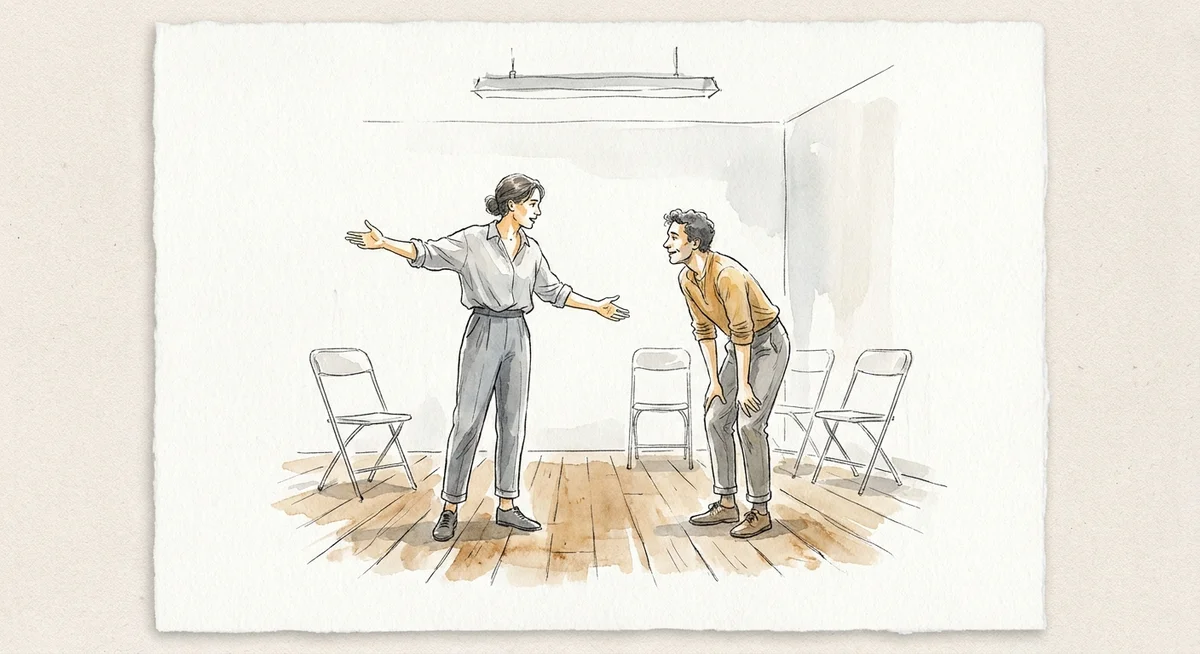
If you've ever watched actors riff effortlessly off each other and thought "I could never do that," you're not alone. Improvisation can feel terrifying to try. But improv training isn't really about being funny on the spot or performing without a script. It's about listening, reacting truthfully, and trusting your instincts. Those are skills every actor can use, whether you're preparing a self-tape in your spare room or stepping into a rehearsal room for the first time.
This guide is for UK actors who are curious about what improvisation classes actually involve, how the training translates to auditions and performance work, and how to find a class that suits you. Improv isn't mandatory for every performer. But for many actors, it fills gaps that traditional scene study or monologue work can leave behind.
What Improv Training Actually Develops
Improvisation classes build a surprisingly wide range of skills, many of which carry directly into scripted work.
Active listening. Good improv depends on genuinely hearing what your scene partner says and how they say it. Most of us spend a lot of our time in scenes (and in life) planning what to say next rather than truly receiving what's being offered. Improv exercises train you to stay open and responsive, which makes your scripted work feel more alive.
"Yes, and." This is the foundational idea in most improv training: accept what your partner offers and build on it. In practice, it teaches you to stop blocking ideas and to commit fully to the moment. That willingness to say yes and move forward is enormously useful in auditions, where hesitation or second-guessing can flatten a performance.
Spontaneity and risk-taking. Improv creates a space where failure is not just tolerated but welcomed. When you let go of the need to be perfect, you free yourself to make bolder, more interesting choices. Research published in journals such as Thinking Skills and Creativity suggests that improvisational theatre training measurably improves creative thinking, psychological well-being, and self-efficacy.
Emotional availability. Improv asks you to access a range of emotions quickly and without the safety net of a script. Over time, this builds emotional readiness that helps you shift between states in auditions or find unexpected layers in a character.
Ensemble awareness. Improvisation is inherently collaborative. You learn to read non-verbal cues, support your scene partners' choices, and share focus. These are the skills that make you a good company member in any professional context, from a fringe production to a television ensemble.
How Improv Supports Auditions
Casting professionals often talk about "presence," the quality of an actor who is fully in the room, responsive and alive from the first moment. Improv training is one of the most direct ways to develop that.
Consider self-tapes. They're now central to the audition process for UK actors. You often receive sides with limited context and a tight turnaround. Improv training helps you make specific, truthful choices quickly rather than defaulting to something safe. If you'd like to sharpen your self-tape technique alongside improv work, our guide to self-tape auditions covers the technical and creative side in detail.
Cold-reading draws on many of the same muscles. When you're used to making things up on the spot, reading a new scene with confidence and specificity feels far less daunting.
Improv also helps with the less obvious parts of an audition: staying relaxed in the waiting room, handling unexpected redirects from a casting director, recovering when you lose your place. These aren't trivial skills. They can be the difference between a forgettable audition and a callback.
Building Confidence Without Bravado
The confidence improv builds isn't about becoming loud or dominant. It's quieter than that. It's the trust that you can respond to whatever happens in the moment. For actors who tend to over-prepare or freeze under pressure, this can be genuinely freeing.
That said, improv isn't a cure-all for performance anxiety, and anyone dealing with significant anxiety should feel comfortable seeking additional support. A good class will meet you where you are.
Choosing a Class: Levels and Formats
The UK improv landscape has grown considerably in recent years. You'll find classes at established drama schools like RADA and Royal Central, specialist improv hubs like Hoopla and The Free Association in London, and independent workshops in cities across the country.
Tasters and Drop-Ins
Single sessions, typically two to three hours, designed to give you a feel for improv without commitment. Ideal if you're unsure whether it's for you. Expect to pay around £15 to £40.
Beginner Courses
A structured beginner course usually runs for six to eight weeks and covers the fundamentals: spontaneity, listening, accepting offers, and basic scene work. These are the most common entry point and typically cost £150 to £300. You don't need prior improv experience, or any acting training at all in many cases.
If you're weighing up different types of acting classes more broadly, our guide to choosing the right UK class, course or coach may help you see where improv fits alongside other options.
Intermediate and Advanced Courses
Once you've got the basics down, intermediate and advanced courses explore long-form improvisation, genre work, and more complex performance techniques. Some culminate in a public showcase, which can be a wonderful (if nerve-wracking) way to put your skills into practice. Prices are broadly similar to beginner courses, though advanced intensives at drama schools can run higher.
Intensives
Weekend or week-long intensives compress a lot of learning into a short period. Useful if your schedule doesn't suit a weekly commitment, or if you want a focused burst of training. They're tiring. In a good way.
Online Classes
Many providers now offer online improv sessions, which work well for exercises focused on listening and verbal spontaneity. Less effective for physical work, but a practical option if you're outside a major city or have accessibility needs.
What Good Teaching Looks Like
The quality of your experience will depend heavily on who's leading the class.
A clear syllabus with stated learning outcomes. You should know what the course covers and what you can expect to gain. Vague descriptions like "explore your creativity" without further detail are worth questioning.
A psychologically safe environment. Good improv teaching encourages play and experimentation within a supportive framework. The facilitator should set clear boundaries and create a space where everyone feels comfortable making mistakes.
Professional experience. The best improv teachers tend to have genuine performance or industry experience alongside their teaching. They don't need a string of West End credits, but they should understand the professional context in which actors work.
Manageable class sizes. Ideally around 10 to 14 students. Larger, and you'll spend too much time watching. Smaller, and you may lose the group energy that makes improv exercises work.
A clear progression path. If you enjoy a beginner course, it helps to know what comes next.
Transparent policies. Reputable schools will have clear terms covering cancellation, refunds, and safeguarding. Especially important if you're booking an intensive or a longer course.
For more on evaluating teachers and training environments, our piece on how to choose the right acting coach covers many of the same principles.
Typical Costs and Time Commitments
A quick overview of what you can expect to pay in the UK, particularly in London and other major cities:
- Drop-in sessions: £15 to £40 per class
- Beginner courses (6 to 8 weeks): £150 to £300
- Intermediate and advanced courses: £200 to £350
- Drama school short courses (e.g. RADA): up to £395 for five weeks
- Weekend intensives: £100 to £250
Most weekly courses ask for two to three hours per session, usually evenings or weekends. Some providers offer daytime classes for actors with flexible schedules.
Cost alone doesn't indicate quality. Some of the most effective improv teaching in the UK happens in modestly priced community workshops and independent classes, not just at headline institutions.
Red Flags Before Booking
Not every improv class is well-run, and a bad experience can put you off the work entirely. A few things to watch for:
Humiliation as a teaching tool. Improv should be challenging, but never cruel. If a teacher uses put-downs, singles people out for laughs, or creates an atmosphere of fear, leave. That's bad teaching.
No clear structure. A class that's just a series of disconnected games with no sense of progression won't develop your skills in any meaningful way.
Huge class sizes. If there are 25 people in a room and one facilitator, you won't get the stage time you need.
Vague refund and cancellation policies. Before you hand over money, make sure you understand what happens if you need to withdraw or if a class is cancelled.
Pressure to perform publicly before you're ready. Showcases can be brilliant, but participation should always be optional, especially at beginner level.
Dogma about method. Improv has many traditions: short-form, long-form, Johnstone-influenced, Chicago-style, and more. A good teacher acknowledges this breadth rather than dismissing everything outside their own approach.
Making the Most of Your Training
If you decide to try an improv class, a few things will help you get more from it.
Show up consistently. Improv skills build cumulatively, and the group dynamic matters. Dipping in and out makes it harder to progress.
Resist the urge to be clever. The most effective improv comes from honesty and simplicity, not from trying to land jokes or outsmart your scene partner.
Reflect after each session. Take a few minutes to think about what felt comfortable, what stretched you, and what you want to work on next time.
Apply what you learn. Bring your improv listening skills into your next audition, rehearsal, or even a conversation. The crossover is often immediate.
Be patient with yourself. Improv can feel awkward and exposing at first, especially if you're used to working with a script. Give yourself permission to be a beginner.
Is Improv Right for You?
Improvisation training isn't essential for every actor, and there's no shame in deciding it's not your thing. Some performers thrive on meticulous preparation and find the unstructured nature of improv uncomfortable rather than freeing. That's fine.
But if you've been feeling stuck in your audition work, struggling to connect with scene partners, or wanting to take more creative risks, an improv class is one of the most accessible and enjoyable ways to get unstuck. The skills it builds (listening, presence, spontaneity, generosity) are valuable in virtually every corner of the profession.
Start with a taster session or a beginner course. See how it feels.