Acting Schools for Adults: How to Choose the Right UK Class, Course or Coach
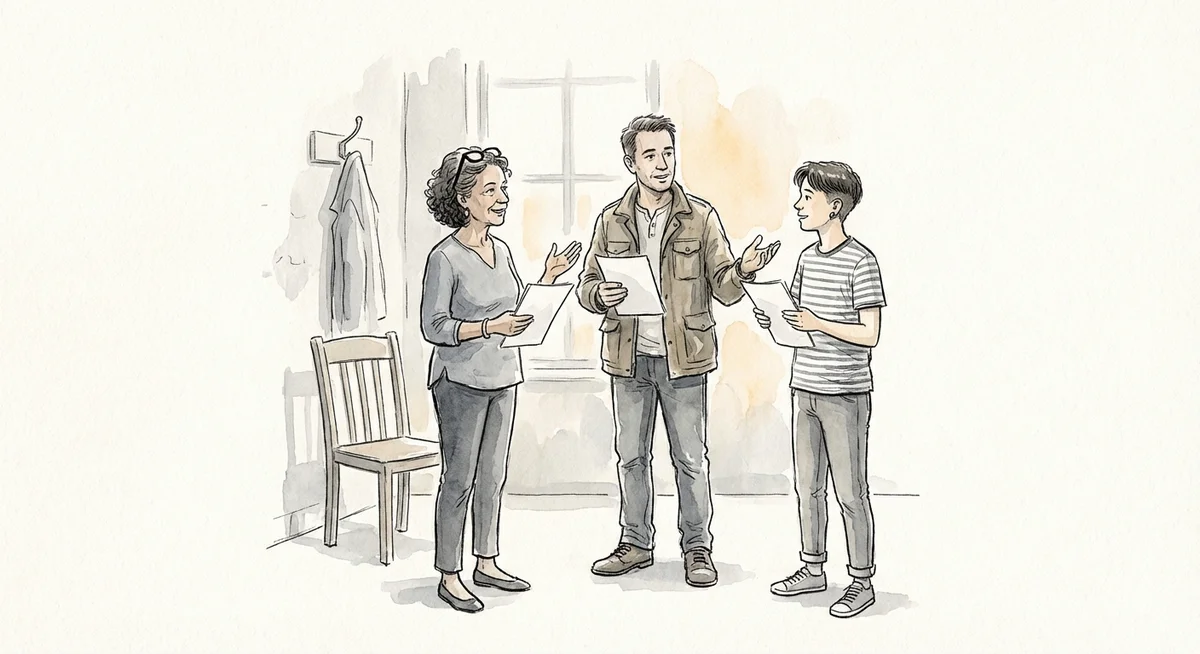
If you're an adult looking into acting training, you've probably noticed that most advice online is aimed at teenagers applying to three-year conservatoire programmes. That can feel alienating if you're starting later in life, returning after a break, or exploring acting alongside a career. The UK actually has a rich landscape of adult-friendly training, from casual evening classes to intensive part-time diplomas and private coaching. The hard part is working out which option suits your goals, your schedule, and your budget.
This guide is here to help. Whether you're building confidence, developing craft, or preparing for professional auditions, we'll cover the main training routes, what they cost, what quality looks like, and the questions worth asking before you commit.
The main training routes for adults
Adult acting training in the UK broadly falls into five categories. Each serves a different purpose, and there's no single "right" path.
Weekly or termly classes run in the evening or at weekends, usually in blocks of six to ten weeks. They suit beginners and those who want steady, low-pressure development alongside other commitments.
Short intensive workshops are typically one or two days, focused on a specific skill like screen acting, Shakespeare, or audition technique. Useful if you want a concentrated boost in a particular area.
Part-time vocational courses, run by conservatoires and specialist schools, are more structured programmes lasting several months to a year or more. They aim at a professional standard and often require an audition to join.
Online and blended courses have become increasingly common since the pandemic. They combine live online sessions with in-person work or self-directed study and work well if you live outside a major city or have an unpredictable schedule.
One-to-one coaching means private sessions with an acting coach, tailored entirely to your needs. This is ideal for audition preparation, self-tape work, or addressing specific gaps in your technique. If you're unsure what a coach actually does in a session, our guide on what an acting coach does explains the role in detail.
Most adult learners eventually combine more than one of these. You might take a termly class for general development and book a private coach when you have a specific audition coming up.
Get clear on your goal before you book
Before comparing schools and courses, it helps to be honest about what you're actually looking for. This isn't about labelling yourself. It's about spending your time and money wisely.
Ask yourself which of these feels closest to where you are right now. Are you building confidence, wanting to feel more at ease expressing yourself on stage or in everyday life? Are you after craft foundations like voice, movement, text analysis, and improvisation? Maybe you're preparing for auditions and need practical help with monologues, self-tapes, or casting panels. You might be specifically interested in screen skills, which have their own set of demands. Perhaps you want community, to meet other actors and feel part of a creative world. Or you could be exploring a career change and need a training pathway the industry will recognise.
Your goal shapes everything: the format you choose, how much you should expect to invest, and what "progress" looks like. Someone building confidence doesn't need a six-month diploma. Someone preparing for a career change probably needs more than a weekend workshop.
Comparing formats: commitment, cost, and who they suit
Here's a practical breakdown to help you weigh up your options.
Weekly and termly classes
These typically cost £150 to £400 for a six-to-eight-week block, with one evening or weekend session per week. They're the most accessible starting point for most adults: beginners, confidence builders, and those who want a regular creative outlet. Feedback is group-based, so you'll get notes but limited individual attention. City Academy, for example, offers beginner courses in London from around £250. Similar options exist in most UK cities and larger towns.
One-day or weekend workshops
Expect to pay £50 to £120 for a single day or weekend. These suit experienced actors topping up a specific skill, or curious beginners testing the water. Feedback quality varies depending on group size and the workshop leader. Workshops are great for trying something new without a long commitment. Look for ones with a clearly stated focus. "Introduction to Meisner Technique" tells you more than "Unlock Your Inner Actor."
Part-time vocational courses
These range from £1,000 to £4,000 or more (Mountview's Part-Time Acting Vocational course, for instance, is around £3,040 for a six-month term). You'll typically spend several hours per week in training over several months, sometimes with intensive weekends. Feedback is high quality, often including individual tutorials, showings, and structured assessment. Programmes at schools like RADA and Mountview are a meaningful investment. Some require an audition. They're worth considering if you want rigorous training that carries weight on a CV.
Online and blended learning
Costs vary widely, from free resources to structured courses at several hundred pounds. Scheduling is flexible, often self-paced with scheduled live sessions. RADA's Blended Acting Foundations course is one example of a well-designed hybrid programme aimed at adult learners. Online training can be surprisingly effective for live classes, less so for pre-recorded content. The key thing to check is whether live feedback is included. Watching videos alone won't develop your acting.
Private one-to-one coaching
Rates run from £40 to £150 or more per hour in London, often less outside the capital. You book as needed, and every minute is focused on you. This is the highest-feedback format available, ideal for audition preparation, targeted skill development, or actors who want personalised attention. If you're weighing up coaching against group classes, our article on how to choose the right acting coach for your career goals may help.
What high-quality adult teaching looks like
Not all acting classes are equal, and teaching quality matters far more than the name on the building.
The best teachers are usually still working as actors, directors, or casting professionals. They bring current knowledge and real credibility. A good programme will have a clear syllabus: you should know what each session covers and what skills the course aims to develop. Vagueness is a warning sign.
Feedback culture matters enormously. Good teaching challenges you without shaming you. Adults often carry more self-consciousness into the room than younger students, and a skilled teacher knows how to handle that. You also want appropriate peer grouping. Being the only beginner in a room of experienced actors (or vice versa) is frustrating for everyone.
Finally, the work should be practical and applicable. You should leave each session with something you can use, whether that's a vocal warm-up, a way of breaking down a script, or a sharper understanding of what the camera needs from you.
London, regional options, and when online makes sense
London has the widest range of acting schools for adults, which makes sense given its concentration of theatres, studios, and industry professionals. You'll find options at every level, from introductory classes at places like City Academy to professional-track programmes at RADA, LAMDA, and Mountview.
But London isn't the only option, and it's not automatically the best one.
Regional training
Cities like Manchester, Bristol, Glasgow, Leeds, Birmingham, and Edinburgh all have established acting schools and community programmes for adults. Regional training often costs less than London equivalents and can offer smaller class sizes. Local theatres and arts centres frequently run adult workshops too. These can be excellent and are easy to overlook.
When online works well
Online training is genuinely useful for self-tape technique, cold reading practice, accent coaching, and one-to-one sessions. If you're in a rural area or your schedule makes regular in-person attendance difficult, a well-structured online class can be a strong alternative. Just make sure it includes live interaction, not just pre-recorded content.
Assessing level fit and whether a course is genuinely adult-friendly
One of the most common frustrations for adult learners is ending up in a class that doesn't match their experience level or feels designed for a much younger group. Here's how to check before you book.
Look for explicit level descriptions. "Beginners welcome" is different from "suitable for all levels," which often means a mixed group. If you're a genuine beginner, look for courses that specifically cater to that.
Check the age profile. Some schools are upfront about the age range of their students. If not, ask. There's nothing wrong with a mixed-age class, but you should know what to expect.
Ask about audition or entry requirements for part-time vocational courses. This isn't gatekeeping; it's about ensuring everyone in the room is working at a similar level.
And read between the lines on marketing. If every image on the website features twenty-year-olds, the course might not be designed with you in mind.
Questions to ask before booking
A good school or coach will welcome questions. If they seem evasive or pushy, that tells you something.
Before you commit, consider asking: What will I learn by the end of this course or block of sessions? What's the typical class size? What experience level is this aimed at? Who teaches the sessions, and what's their professional background? Is there a trial session or taster option? What's the refund or transfer policy? How is feedback given, in front of the group, privately, or both?
Making the most of a trial session
Many schools offer a trial class, and it's worth treating it as a genuine assessment of them, not just of yourself. Notice how the teacher gives feedback. Watch whether all students get attention, not just the confident ones. Pay attention to how you feel in the room: safe, engaged, and slightly stretched is what you're after. If you'd like a fuller picture of what a first session involves, take a look at our guide on what to expect from your first acting lesson.
Red flags to watch for
Most acting schools and coaches operate with integrity, but it's worth knowing what to be cautious about.
Be wary of anyone overselling industry connections. Promises of agent introductions or casting opportunities as a selling point for a beginner course should raise an eyebrow. Training is about developing skill, not buying access.
Vague learning outcomes are another concern. If a course can't tell you what you'll work on, it may not be well planned. Similarly, a class where you perform but never receive constructive notes isn't really teaching you anything.
Watch out for pressure to sign up immediately. Legitimate courses don't need high-pressure sales tactics. If you're being told spaces are "almost gone" every time you visit the website, be sceptical. And always check for transparent pricing and a clear refund policy before paying.
What realistic progress looks like in the first 90 days
It's natural to want to know whether training is "working." Here's what you can reasonably expect in your first three months of consistent study, whether that's a weekly class, regular coaching, or a structured course.
You'll feel more at ease performing in front of others and more willing to take risks. You'll start to notice habits in your voice and body, and have tools to work with them. Your understanding of text will sharpen: you'll have a clearer sense of how to break down a scene, what your character wants, what's in the way, and how to make active choices. If your training includes screen work, you should feel comfortable recording a basic self-tape and understand what casting directors look for.
Perhaps most valuably, you'll have a much better idea of what kind of training you want next and where your real interests lie.
Progress isn't always linear. Some weeks will feel more productive than others. That's normal. The important thing is that you feel supported, challenged, and a little more capable than when you started.
Finding your path
There's no single right way to train as an adult actor. The best choice is the one that matches where you are now: your goals, your budget, your schedule, and your honest assessment of what you need. Start with one step, whether that's a taster class, a conversation with a coach, or simply researching what's available in your area. You can always adjust as you go.