What is Method Acting? A Practical Guide for Actors
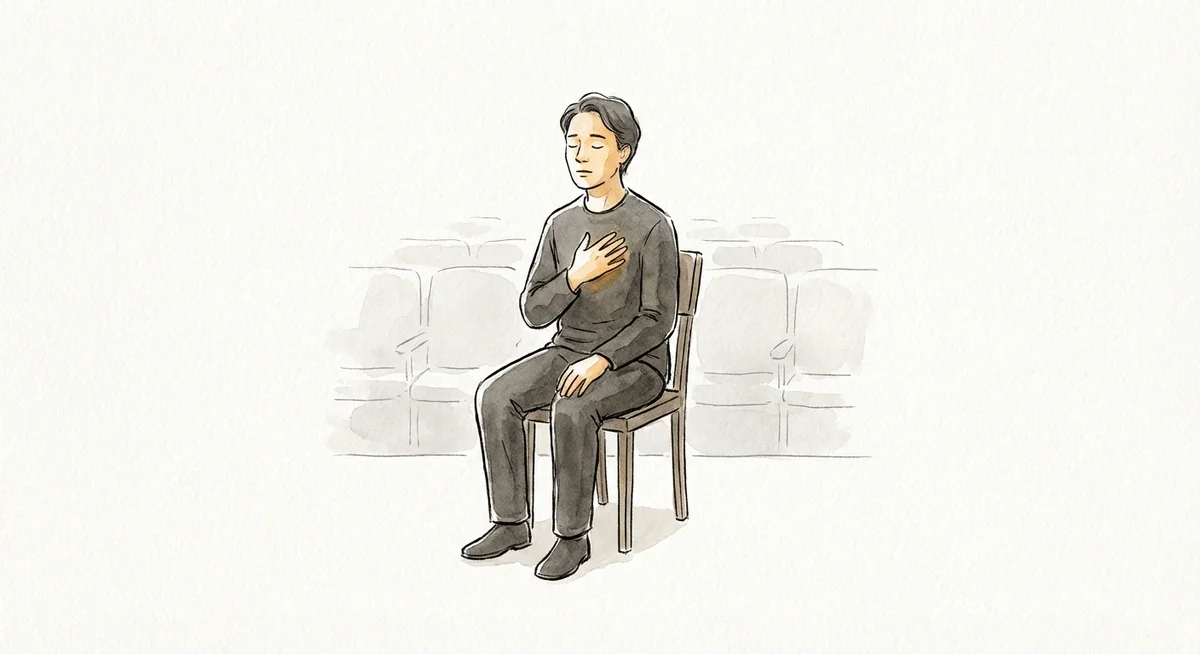
Method acting is one of the most discussed and misunderstood approaches to the craft. You've probably heard dramatic stories about actors who refuse to break character for months, or read interviews where performers describe accessing deeply personal memories to fuel their work. But what does method acting actually involve? And how might it serve you as an actor?
At its heart, method acting is about finding truthful, emotionally connected performances by drawing on your own experiences and sensory awareness. It offers practical tools rather than a rigid philosophy. Whether you're preparing for your first drama school audition or looking to deepen your existing practice, understanding what the method offers (and what it doesn't require) can help you decide if these techniques belong in your toolkit.
The Origins of Method Acting
To understand method acting, we need to travel back to early twentieth-century Russia. Konstantin Stanislavski, co-founder of the Moscow Art Theatre, developed what he called his 'system'. This was a groundbreaking approach that moved away from the declamatory, presentational acting style of the era toward something more psychologically truthful.
Stanislavski introduced concepts that remain foundational today: the 'magic if' (asking yourself how you would behave in your character's circumstances), given circumstances (the facts of the world your character inhabits), and affective memory (using recalled emotions to connect with a role). His work was revolutionary because it placed the actor's inner life at the centre of performance.
The American Adaptation
Stanislavski's ideas crossed the Atlantic through students like Maria Ouspenskaya and Richard Boleslavsky, who taught in New York. The Group Theatre, founded in 1931, became a crucible for these ideas. Members included Lee Strasberg, Stella Adler, and Sanford Meisner, each developing their own interpretations.
Strasberg refined what became known as 'The Method' at the Actors Studio from 1951 onwards. He placed particular emphasis on relaxation exercises, sensory work, and emotional memory, creating an approach specifically designed for the intimacy of film acting, where the camera catches every flicker of thought and feeling.
Stanislavski himself evolved over time, moving away from heavy reliance on affective memory toward what he called the 'method of physical actions'. Even the founders of these techniques saw them as evolving tools rather than fixed rules.
Core Techniques Explained
Method acting encompasses several distinct exercises and approaches. Here are the key techniques you're likely to encounter.
Affective Memory (Emotional Memory)
This is perhaps the most famous and most debated method technique. Affective memory involves recalling a significant emotional experience from your own life and using it to connect with your character's feelings in a scene.
If your character experiences grief, you might recall a personal loss. The aim isn't to relive trauma but to access the sensory details surrounding an emotional moment (what you saw, heard, smelled) to trigger a truthful response.
A few important notes. This technique works best with memories that are at least seven years old, giving you some emotional distance. It's also not about manufacturing tears on demand. It's about finding genuine connection. If a memory feels too raw or destabilising, it's not the right one to use.
Sense Memory
While affective memory focuses on emotions, sense memory concentrates on physical sensations. You train yourself to recreate experiences like drinking hot coffee, feeling sunshine on your skin, or handling a specific object, all without the actual stimulus present.
This might sound abstract, but it's remarkably practical. If your character is exhausted after a long journey, sense memory helps you access that heaviness in your body. If they're drinking champagne at a celebration, you can recreate the bubbles, the coldness of the glass, the taste. All of this feeds into a more embodied, specific performance.
Try this: Close your eyes and imagine holding a cup of tea. Feel the warmth of the ceramic, the weight in your hands, the steam rising toward your face. Notice how your body responds. This simple exercise is the foundation of sense memory work.
Substitution
Substitution involves replacing your character's circumstances with personally meaningful equivalents. If your character is desperately trying to win back their estranged partner, you might substitute someone from your own life to make the stakes feel real and urgent.
This technique helps when your character's specific situation is outside your experience. You're not pretending the circumstances are identical. You're finding emotional parallels that allow you to invest fully in the scene.
Animal Work
This technique involves studying and physically embodying an animal to discover new ways of moving, breathing, and responding. It sounds unusual, but it's surprisingly effective for finding a character's physicality when your own habits keep getting in the way.
The goal isn't literal imitation. You won't be crawling around on set. Instead, animal work helps you internalise qualities like a cat's alertness, a bear's weight, or a bird's quick movements, which then subtly inform your human character.
How Method Acting Differs from Other Approaches
Method acting is one of several major approaches you might encounter in training. Understanding the differences can help you find what resonates with your instincts.
Meisner Technique
Where the method often begins with internal preparation and personal memory, Meisner technique focuses outward on your scene partner and the present moment. Sandy Meisner famously said acting is 'living truthfully under imaginary circumstances', achieved through exercises that train you to listen and respond spontaneously. If method acting asks 'What do I bring to this?', Meisner asks 'What is my partner giving me right now?'
Practical Aesthetics
Developed by David Mamet and William H. Macy, Practical Aesthetics takes a pragmatic, script-based approach. It focuses on identifying clear, playable objectives and actions rather than accessing personal emotional history. For actors wary of psychological deep-diving, this offers a craft-focused alternative.
Classical and Technical Approaches
Classical training emphasises external craft: voice, movement, text analysis, technical precision. The assumption is that doing the right actions with skill will produce truthful feeling. Working from the outside in, rather than the inside out.
None of these approaches is inherently superior. Many working actors draw from several traditions, using whatever serves the role and the moment.
Learning from Famous Method Actors
Several high-profile actors have become associated with method acting, though their approaches vary considerably.
Daniel Day-Lewis is known for his extensive preparation: learning Czech, living in the wilderness, remaining in a wheelchair throughout production. What's genuinely instructive isn't the extremity but the disciplined curiosity. His commitment to understanding his characters through research, physical training, and immersive preparation. The lesson isn't that you must suffer, but that thorough preparation breeds confidence and specificity.
Meryl Streep blends keen observation with emotional connection. She's famous for her dialect work and physical transformation, but she also speaks about finding personal points of entry into her characters. Her career demonstrates that method techniques can support versatility rather than locking you into one type of role.
Jared Leto's intense commitment (sending unusual gifts to castmates, staying in character between scenes) has generated plenty of headlines. His example raises important questions about boundaries: deep preparation is valuable, but your process shouldn't negatively impact your colleagues.
The common thread among these actors isn't suffering or eccentricity. It's specificity. They make detailed, personal choices that make their characters feel like real human beings rather than general types.
Common Misconceptions About Method Acting
Let's address some myths that can make method acting seem intimidating or impractical.
You must stay in character 24/7. In reality, most method actors use these techniques in preparation and rehearsal, then trust that the work will be there when they need it on set or stage. Refusing to break character is a personal choice some actors make, not a requirement.
Method acting requires suffering. The method is about finding authentic connection, not manufacturing misery. Strasberg's exercises include relaxation and sense memory work that can be pleasurable and grounding. If a technique consistently causes distress, it's being misapplied.
You need to have experienced everything your character has. Substitution and imagination exist precisely because we can't have lived through every situation. The method helps you find personal connections to unfamiliar circumstances.
Method acting is the only 'real' acting. Brilliant, truthful performances have been delivered by actors using entirely different approaches. The method is one valid path among several.
Is Method Acting Right for You?
There's no universal answer, but here are some considerations.
Method techniques, particularly affective memory, ask you to engage with your emotional history. If you have unresolved trauma, approach this work cautiously and ideally with a coach trained in safeguarding. For some actors, these techniques feel liberating. For others, they feel invasive. Both responses are valid.
Method preparation often suits film and television, where you typically shoot scenes out of order and need to access specific emotional states on demand. The intimacy of the camera rewards the subtle, internal work the method cultivates. For theatre, where you perform the same role eight shows a week, relying heavily on personal emotional recall can be exhausting and inconsistent. Many stage actors prefer techniques that are more repeatable.
Ask yourself: Do you tend to prepare internally, building a rich imaginative world before you start working with others? Or do you come alive in the moment, responding to your scene partners? Method acting tends to suit actors who lean toward the former, though it can also help spontaneous actors develop deeper preparation.
And consider your circumstances honestly. Deep method preparation requires time that professional schedules don't always allow. The ability to do solid work quickly, using whatever techniques serve the moment, is its own valuable skill.
How to Explore Method Techniques
If you're curious about method acting, here are some practical starting points.
Finding the Right Coach
Look for teachers who reference Stanislavski and Strasberg in their training background, who prioritise actor wellbeing and discuss safeguarding, and who create an environment where you feel safe to take risks. Ask potential coaches about their approach to emotional memory work and how they support students who find exercises challenging. A good teacher will welcome these questions.
Exercises to Try
Start with sense memory, which is accessible and low-risk. Recreate drinking your morning tea or coffee without the actual cup. Recall a specific place that makes you feel calm, engaging all five senses. Handle an imaginary object with full sensory detail. These exercises build foundational skills without requiring you to access difficult emotions.
Recommended Reading
Stanislavski's An Actor Prepares is the foundational text and still remarkably readable. Lee Strasberg's A Dream of Passion offers his own explanation of his work. Uta Hagen's Respect for Acting is a practical, warm guide that builds on method principles and is particularly recommended for its accessibility.
Finding Your Own Path
Method acting offers valuable tools: ways to access authentic emotion, to build sensory-rich performances, and to find personal connections with characters unlike yourself. It's not a religion requiring total devotion, nor a formula guaranteeing great work. It's a set of techniques that have helped many actors and may help you.
The best approach is often an eclectic one. Take what serves you from the method, combine it with other techniques that resonate, and build a practice that supports both your artistry and your wellbeing. Your toolkit will evolve throughout your career.
If method acting intrigues you, find a qualified coach and try some exercises. Notice what opens up for you and what feels forced. Trust your instincts. The goal isn't to act like Daniel Day-Lewis, but to find your own truthful, sustainable way into the work.