Self-Tape Auditions: The Complete Guide for Actors
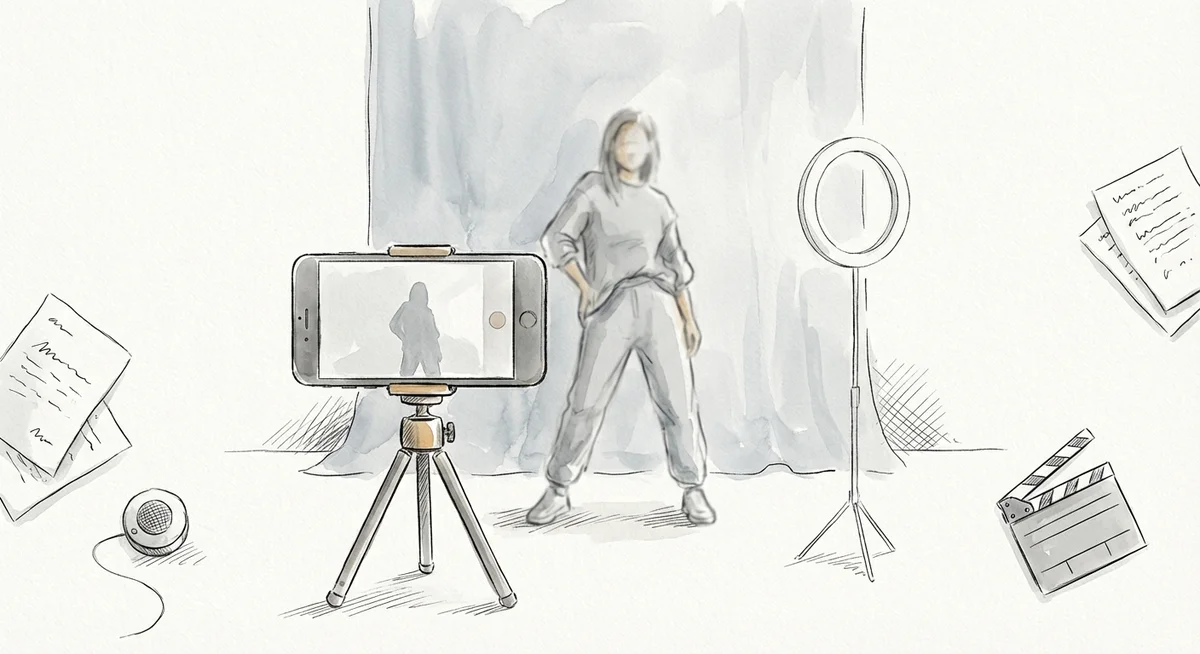
If you've auditioned for anything in the last few years, chances are you've filmed a self-tape. What was once an occasional convenience has become the default first-round audition for most professional work in the UK and beyond. Some actors find that liberating. Others have a new set of anxieties: Am I doing this right? Is my setup good enough? Why does my living room look like a crime scene on camera?
This guide covers the practicalities: equipment, lighting, sound, framing, and the less obvious things that make a real difference. No fluff, no expensive gear lists.
Why Self-Tapes Have Become Standard
The shift to self-taping accelerated during the pandemic, and it hasn't rolled back. Casting directors found that self-tapes let them see a much wider range of actors for each role, including those based outside London or unable to attend in-person calls at short notice. For actors, it means more opportunities and the chance to submit your best work rather than a single pressured take in an unfamiliar room.
In 2021, the Casting Directors' Guild (CDG), Equity, and the Personal Managers' Association (PMA) formalised a Code of Best Practice for self-tape auditions. It sets out important protections: a target minimum turnaround of four working days, a maximum of six pages of material for a first audition, and a clear prohibition on requests for nudity in self-tapes. Worth familiarising yourself with.
Self-taping does come with real challenges, though. It shifts costs and labour onto actors, and not everyone has equal access to quiet space, equipment, or reliable readers. Equity continues to advocate for better regulation and transparency. Knowing your rights matters alongside knowing your setup.
Essential Equipment on a Budget
You almost certainly already own the most important piece of equipment. A modern smartphone, anything from the last four or five years, shoots video that is more than good enough. You do not need a dedicated camera.
What you do need:
- A smartphone with a rear-facing camera (front cameras are lower quality). Prop the phone so the rear camera faces you and use a mirror or monitor to check framing.
- A tripod or stable mount. A basic phone tripod costs around £15–£25. The Amazon Basics phone tripod or the UBeesize flexible tripod are solid budget options. A stack of books works at a pinch, but a tripod saves time and frustration.
- A simple light source (more on this below).
- Headphones with a built-in mic as a minimum audio upgrade, or a clip-on lapel mic (around £10–£20).
What you don't need: a ring light (they create an unnatural catchlight in the eyes), a DSLR, professional editing software, or a backdrop stand.
Lighting Basics
Good lighting makes you look present and professional. Bad lighting makes even strong performances hard to watch. The goal is soft, even illumination on your face without harsh shadows.
Natural light is your best free option. Face a window during the day, with the camera between you and the light. Avoid direct sunlight. A slightly overcast day or a net curtain gives beautifully diffused light. Never have a window behind you; it silhouettes your face.
For evening taping or rooms without good daylight, an affordable LED panel makes a big difference. The Neewer 660 (around £40–£60) is popular among actors, and even a budget desk-mounted LED video light (£15–£25) can work well. Position it slightly above eye level and off to one side, angled towards your face. If you notice a strong shadow on one side, prop a white sheet of card or a pillowcase on the opposite side to bounce light back.
Avoid overhead room lighting on its own. It casts unflattering shadows under the eyes and nose. If you must use ceiling lights, supplement them with a front-facing source.
Sound Quality
This might be the single most important technical point in this guide: audio matters more than video quality. Casting directors will watch a slightly grainy tape with clear sound. They will skip past a beautifully lit tape where the dialogue is muffled or echoey.
Choose the quietest room you have. Turn off anything that hums: fridges, fans, washing machines, central heating if possible. Close windows. Hard floors and bare walls create echo, so a carpeted room with soft furnishings absorbs sound naturally. If your space is echoey, hanging a duvet behind the camera can make a surprising difference.
For microphones, a clip-on lapel mic (also called a lavalier) is the best budget investment you can make. The Rode SmartLav+ (around £50) is excellent. The Boya BY-M1 (around £15) is a strong cheaper alternative that plugs directly into most smartphones. Clip it about 15–20cm below your chin and tuck the cable out of shot.
Always do a short test recording before your actual take. Play it back on headphones and listen for background noise, echo, or volume issues. Two minutes of checking will save you from discovering problems after an hour of taping.
Framing and Eyeline
Standard self-tape framing is a mid-close shot: roughly the middle of your chest to just above the top of your head. Leave a small amount of space above your head. Shoot in landscape orientation (horizontal).
Your eyeline should sit close to the camera lens but not directly into it, unless you're told otherwise. Position your reader right next to the lens, slightly to one side. This creates a natural, engaged eyeline that feels connected without the intensity of a direct-to-camera look.
If the scene calls for multiple characters, establish slightly different eyelines for each: one just left of the lens, one just right. Keep the shifts subtle. Big head movements read as distracting on a tight frame.
Make sure the camera is at eye level, not angled up from a table or down from a shelf. And avoid watching yourself on screen while performing. It pulls your focus and your eyeline.
Background and Wardrobe
Keep your background neutral and non-distracting. A plain wall in grey, off-white, or muted blue works well. Avoid busy wallpaper, cluttered bookshelves, or anything that draws the eye away from you. If your walls aren't ideal, a plain bedsheet pinned flat or a cheap photography backdrop (around £10–£15) does the job.
For wardrobe, think suggestion rather than costume. Nobody wants to see full period dress. Wear something that feels appropriate to the world of the piece. Solid colours work best on camera; avoid busy patterns, bright white, and logos. Reading for a detective? A dark jacket over a plain top says enough. Casual comedy? A relaxed but tidy look signals the right tone.
One thing that's easy to overlook: check how your clothing looks against your background on camera before you start. Colour combinations that look fine in person can clash or blend unhelpfully on screen.
Working with a Reader
A good reader makes a real difference. They don't need to be an actor. They need to be consistent, present, and not performative. Their job is to give you something genuine to respond to, not to deliver their own audition.
A few common pitfalls: readers who over-act and compete with your performance, readers whose timing shifts unpredictably between takes (making it hard to build consistency), and readers who are simply too loud, unbalancing the tape. Ask them to stay grounded, natural, and at conversational volume.
If you can't find someone in person, you have options. Some actors swap reader duties with friends over video call. There are apps and services designed for remote reading, and some acting coaches offer reader sessions. As a last resort, pre-record the other lines and play them back through a speaker while you tape, though this limits spontaneity.
If you absolutely must read alone, leave natural pauses where the other character's lines fall. Respond as though you've heard them. It's not ideal, but casting directors understand the constraints.
Technical Requirements
Getting the creative work right matters most, but technical missteps can undermine it. A few essentials:
File format: MP4 is standard. Most smartphones record in it by default.
Naming convention: Use SURNAME_Firstname_Role unless told otherwise. For example: PATEL_Anisha_DCI-Morgan. Clear naming makes the casting team's life easier.
File size: Film in 1080p (Full HD). It's perfectly sufficient. 4K creates unnecessarily large files without visible benefit on the screens where tapes are reviewed. If you need to compress, Handbrake is free and reliable.
Upload platforms: WeTransfer (free up to 2GB), password-protected Vimeo links, or Google Drive are all commonly accepted. Always check the casting breakdown for specific instructions.
Slates: If asked to slate, keep it brief and warm. Your name, agent if applicable, and the role. Look into the lens for this part.
Don't add music, titles, transitions, or effects. Casting directors want to see you.
What Casting Directors Actually Look For
Understanding how tapes are reviewed can ease a lot of anxiety. Casting directors often watch hundreds for a single role. They typically form an initial impression within the first ten to fifteen seconds. That doesn't mean they stop watching, but your opening moments carry weight.
What gets attention: a connected, truthful performance (this outweighs production quality every time), clear audio and framing, and specific choices about the character. If your read sounds like everyone else's, it's easy to scroll past. On a tight frame, small grounded work reads powerfully. You don't need to project to the back of a theatre.
What gets actors passed over: poor sound (the most common technical reason tapes are skipped), over-complicated setups that distract from the work, not following the brief (if it says two scenes, submit two scenes; if it says three minutes, respect that), and apologetic energy. Don't start with a preamble about your equipment or your cold. Just begin.
Re-Taping Etiquette
Sometimes you'll submit a tape and immediately wish you'd made a different choice, or realise there was a technical problem. Is it acceptable to ask for a re-tape? Generally yes, but how you handle it matters.
If there's a genuine technical issue (sound dropout, wrong scene, corrupted file), contact your agent or the casting team promptly. A brief, professional message is enough: "I've noticed an audio issue on my submitted tape. Would it be possible to send a replacement?"
If you want another creative go, tread carefully. One polite request is usually fine, especially if you can give a reason: "Having sat with the material, I'd love to offer a different take if the window is still open." Don't send multiple unsolicited versions. It reads as indecisive rather than dedicated.
Casting teams work to tight schedules. Respect the stated deadline. If you don't hear back, don't chase repeatedly.
Building a Simple Home Studio
If you're taping regularly, and most working actors are, it's worth creating a dedicated setup you can use without faffing about each time. You don't need a spare room or a big investment.
Leave your tripod in position with framing already set. Mark the floor with tape so you know exactly where to stand. Keep a plain backdrop ready, either a painted wall section or a collapsible background (the Neewer collapsible in grey, around £20, folds flat and stores easily). Position your lighting so it takes seconds to switch on, and keep your clip-on mic stored with your phone and tripod so everything lives in one place. Set a chair for your reader at the right distance from the lens.
The real value isn't the equipment. It's the removal of friction. When a self-tape request comes in at 4pm on a Thursday, you want to focus on the script, not on hunting for your tripod. A setup that takes under two minutes to be camera-ready changes the experience entirely.
Self-tapes can feel isolating compared to walking into a casting suite, but they give you something valuable: control. You choose the take. You choose the moment. With a reliable setup and a clear process, the technical side is handled, and all your energy goes where it belongs: into the work.