Drama School Auditions in the UK: How to Choose Material, Prepare Your Self-Tape and Perform Under Pressure
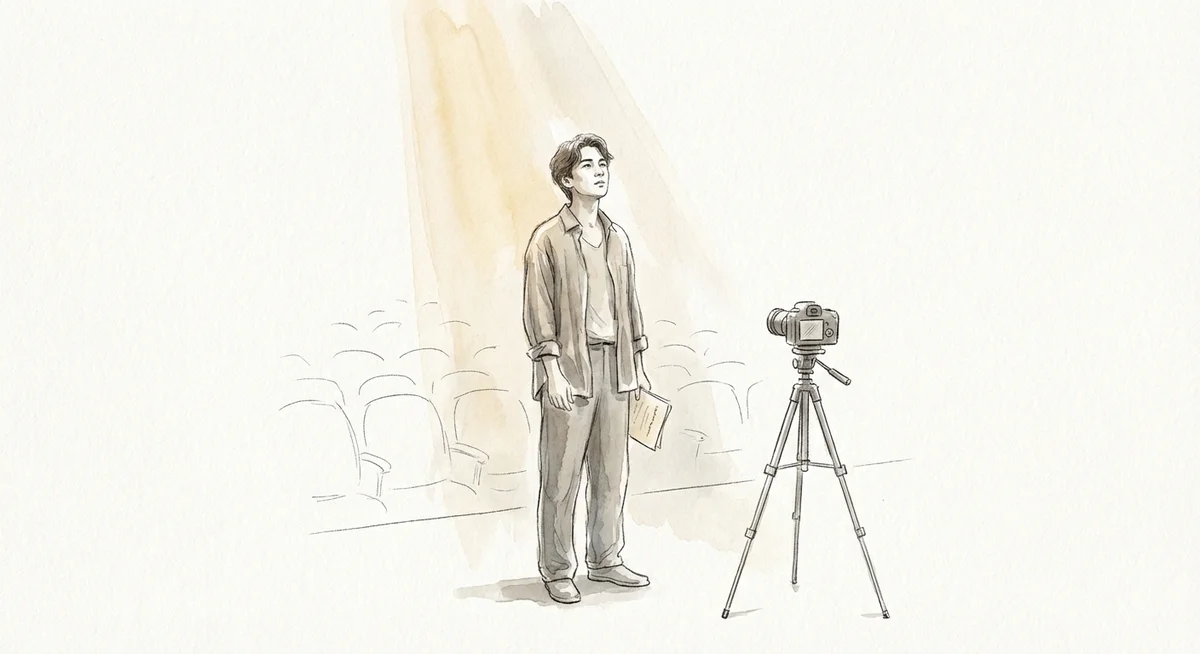
Getting into a UK drama school is one of the most exciting and daunting steps an actor can take. Leading institutions like RADA, LAMDA, and Royal Central receive between 2,000 and 5,000 applications each year for fewer than 50 places per course. That can feel overwhelming. But every single person who earned a place once stood exactly where you're standing now, wondering how to begin.
This guide covers the process in practical terms: how to research what each school actually asks for, how to pick material that shows your range, how to put together a strong self-tape, what happens in recall rounds, and how to manage nerves so they work for you. Whether you're applying straight from sixth form, returning to training later in life, or applying from outside London, these steps apply.
Start by Researching Each School's Requirements
This sounds obvious, but it's the step most often rushed. Drama schools do not all ask for the same thing, and getting the details wrong can mean automatic rejection before anyone sees your work.
Three examples from current admissions procedures show how much the requirements vary:
RADA uses a four-stage process. The first round is a self-tape including a one-minute personal introduction, one classical speech, and one song. Successful applicants move to a recall self-tape, a Zoom workshop, and finally a full in-person workshop day.
LAMDA asks for two contrasting monologues, one up to three minutes, one up to two. One must come from LAMDA's own Classical Monologue List. The process moves from self-tape to regional or London-based in-person workshops across up to three stages.
Guildhall requests a six-minute video including a personal introduction and two contrasting monologues, one of which must be a dramatic speech in verse. They specifically advise that your eyeline should be slightly off-frame, as though you're speaking to an imagined scene partner.
The lesson is simple: go directly to each school's website and read their audition guidance in full. Download any documents they publish. Note the specific requirements (time limits, material restrictions, technical instructions) and create a checklist for each application. If a school provides a list of approved texts, use it. If they say "no props," they mean it.
Most schools now begin with a self-tape. Since 2020, this has become the standard first-round format across almost all major UK drama schools. That shift has made applications more accessible geographically, but it also means your self-tape needs to be well prepared. It's the first impression you'll make.
How to Choose Contrasting Monologues
Choosing the right material is one of the most important decisions in the whole process. The word "contrasting" comes up again and again in school requirements, and it's worth unpacking what that really means.
Contrast means showing range. You want to demonstrate that you can inhabit different emotional worlds, use your voice in different ways, and pursue different kinds of objectives, meaning what your character wants from the person they're speaking to. A useful question to ask yourself: do these two pieces show different sides of me as an actor?
What Makes a Strong Contrast
Think about varying these elements between your two pieces. Period and style is the most obvious: one contemporary piece and one from Shakespeare or another classical playwright. But also consider emotional register. A piece driven by grief or vulnerability lands differently next to one fuelled by wit, fury, or defiance. Physicality matters too. A still, internal monologue contrasts well with something that demands more physical presence. And don't overlook vocal range: look for pieces that let you use different rhythms, tempos, and textures.
Choosing Material That Fits You
Select characters close to your own age and experience wherever possible. Drama schools aren't looking for you to "disappear" into a forty-year-old war veteran if you're nineteen. They want to see truth, a real and specific connection between you and the text. That's much easier when the character's world isn't a million miles from something you understand.
A few practical pointers. Read widely. Go to the library, browse play collections, and read full plays rather than isolated monologues. Understanding the whole story will deepen your performance. Avoid the most commonly performed monologues unless you genuinely connect with them. Audition panels hear certain speeches dozens of times each season. That doesn't make them off-limits, but you'll need to bring something truly personal. If a school provides a set list, start there and treat it as a clue about what they value. And check the time limits carefully, rehearsing with a timer. Going over time is a surprisingly common reason for material to land badly, because it forces you to rush.
If you're exploring different approaches to text work, it helps to understand the major acting methodologies and how they handle character preparation. Our guide to the major acting techniques, from Stanislavski to Meisner, gives a clear overview.
Preparing Your Self-Tape
The self-tape is now your first audition. It deserves the same preparation as walking into a room, if not more. You don't need expensive equipment. What you do need is clarity, good light, and clean audio.
Technical Setup
Use a plain, neutral-coloured wall or backdrop that contrasts with your clothing. Avoid busy patterns, bookshelves, anything that draws the eye away from you. Frame yourself in a mid-shot, roughly from the waist or chest up, so the panel can see your face clearly while catching some gesture and physical life.
Good lighting matters more than camera quality. Bristol Old Vic's audition guidance puts it well: "high-end equipment isn't necessary, but good lighting is essential." Natural daylight from a window in front of you (not behind) is often the best and simplest option. Avoid overhead lighting that casts shadows under your eyes.
Record in a quiet room. Turn off appliances, close windows, and do a test recording to check for background hum. Built-in phone microphones are usually fine if the room is quiet. For eyeline, unless a school specifies otherwise, place your reader or focal point just to the side of the camera lens. This creates the impression of a real scene partner without you staring directly down the barrel.
Performance in the Self-Tape
It's tempting to think of the self-tape as a lesser version of a live audition. It isn't. It's a different medium, and it rewards specificity. Because the camera is close, small truthful choices read powerfully. You don't need to project as you would in a theatre, but you do need to be precise.
Treat the space just off-camera as a real person. Give them a name, a relationship, a reason for being there. The more specific your imagined scene partner, the more alive your performance will be. Record multiple takes and choose the one that feels most connected, not necessarily the most "polished." Panels can spot when someone is performing at a camera rather than living through a moment. And follow every instruction the school gives. If they ask for a slate, do it simply and warmly. If they specify a time limit, respect it.
For a more detailed walkthrough of self-taping, have a look at our complete guide to self-tape auditions.
It's also worth knowing that Equity, the UK performers' union, has been pushing for fairer self-tape guidelines, including a recommended minimum of four to six days' turnaround time and a limit on material requested for initial rounds. This applies more to professional casting, but it reflects a growing recognition that self-taping involves real time, effort, and cost.
What to Expect in Recall Rounds
If your first-round tape is successful, you'll be invited to a recall. The format varies between schools, but common stages include a second self-tape with new material or adjustments, a Zoom-based workshop, and a final in-person workshop day. Some schools, like RADA, use all of these. Others may move you straight to an in-person day.
Zoom and Online Workshops
These are a regular part of the process now. They might involve working on a piece with a tutor, doing improvisation exercises, or responding to direction in real time. Treat it seriously as a working space. Make sure your tech is reliable, your background is clear, and your energy is present and open. Listen carefully. Respond genuinely. These sessions are as much about how you take direction and collaborate as they are about your prepared material.
In-Person Workshop Days
This is often the final stage and the one that carries the most weight. You may be asked to perform your monologues again, take part in group exercises, do movement or voice sessions, and work one-to-one with a tutor who gives you adjustments.
The adjustment is the most important part. When a tutor gives you a note ("try it as though you're sharing a secret," or "let the other person's silence affect you more") they're not telling you your first attempt was wrong. They're seeing whether you can listen, adapt, and stay truthful under pressure. Treat notes as information. Listen, ask a brief clarifying question if you need to, then commit fully to the new direction without abandoning the emotional core of the piece.
In practical terms, this means knowing your material so well that you can shift your approach without scrambling. If you've only ever rehearsed your monologue one way, any adjustment will feel destabilising. If you've explored it from several angles, with different objectives and different tactics, you'll have the flexibility to respond with confidence.
Managing Nerves
Nerves are not a flaw. They're a sign that you care, and the energy they produce can sharpen your work if you know how to channel it. The goal isn't to eliminate nervousness. It's to stop it from pulling you out of the scene and into your own head.
Reframe the Audition
One of the most helpful shifts you can make is to stop treating the audition as a test and start treating it as a scene. You're not there to prove you're "good enough." You're there to tell a story, pursue an objective, and connect with an imagined person. Moving your focus from yourself to the work is one of the most effective ways to manage performance anxiety.
Build a Pre-Audition Routine
Establish a simple grounding routine that you practise in the fifteen to thirty minutes before any audition or recording. It doesn't need to be elaborate.
Start with breath work: slow, deep breaths into the belly. A common pattern is breathing in for four counts, holding for four, and out for six. This activates the parasympathetic nervous system and physically calms the body. Then do some physical shake-outs. Gently shake your hands, arms, and legs. Roll your shoulders. Soften your jaw. Warm your voice with some humming, lip trills, or a few lines of text at a relaxed pace. Finally, before you begin, visualise the person your character is speaking to. What do they look like? What are they feeling? What do you need from them? This pulls your attention outward, which is exactly where it should be.
If nerves are something you struggle with regularly, our piece on how to overcome stage fright covers both practical techniques and longer-term approaches.
On the Day
Arrive early if it's in person. Bring water. Have your material printed or accessible. Don't spend the waiting time scrolling through social media or comparing yourself to other candidates. Find a quiet corner and run through your grounding routine if you can.
During the audition itself, if nerves rise, come back to the other person. Come back to what your character wants. That specificity is your anchor.
A Few Final Thoughts
You may apply to several schools in one cycle. You may not get in the first time. Many successful actors didn't. What matters is that each audition teaches you something, and that you approach the process with curiosity rather than desperation.
Be kind to yourself throughout. The competition is real, but admissions panels aren't looking for perfection. They're looking for potential, honesty, and a willingness to be changed by the work. Those are qualities you can bring to every audition regardless of experience or background.
If you can, work with a coach or trusted teacher during your preparation. A good coach won't just polish your pieces. They'll help you find what's personal in the material, challenge your habits, and give you honest feedback. If coaching isn't financially accessible right now, reading plays, recording yourself, and practising with a friend who'll give you honest notes are all meaningful steps forward.
Whatever stage you're at, you belong in the room. Prepare thoroughly, stay specific, and trust the work.